


Physics around us: from a first experiment to your own lab Lesson 59 of 66
Why does a compass needle turn without a touch?
Use Earth's magnetic field as a reference and check local interference.
Situation and prediction
Imagine leaving the classroom for an open place. A free compass needle settles in roughly one direction. Near a steel desk or phone it may move away. Did Earth change, or did the test location change? Write two possible explanations before reading on.
New words, step by step
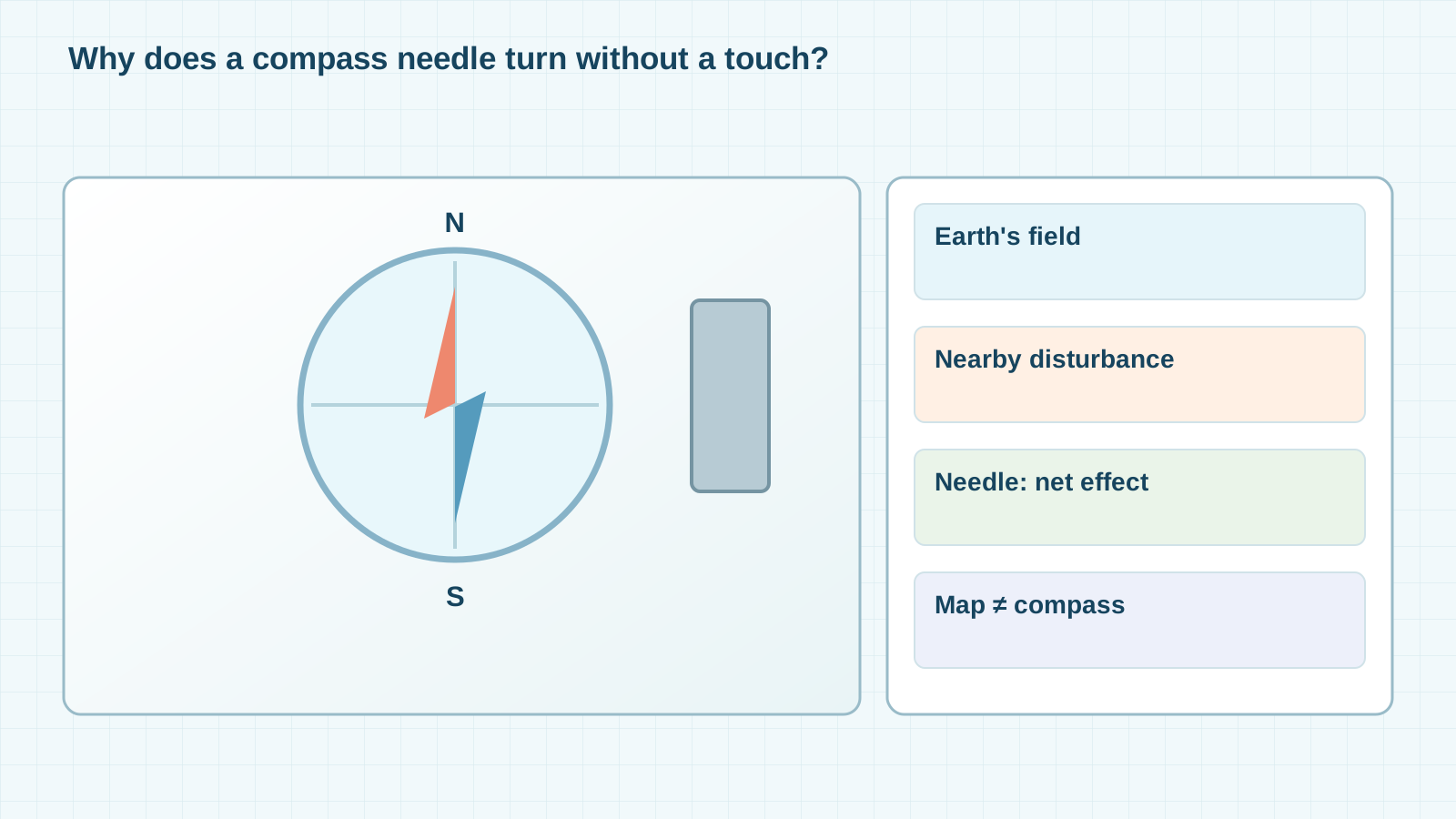
A compass is a small magnet free to turn. Earth’s magnetic field gives it an orientation. Geographic north points toward Earth’s rotational axis on a map; magnetic north is the direction a compass indicates locally. These need not coincide. Their angular difference is magnetic declination. A nearby magnet or current adds another field and can interfere.
Working through supplied data
Supplied example: the needle settles one way on a clear table, turns near a steel stand, and returns after the stand is removed. That supports a local interference explanation. One such observation cannot calculate your city’s declination; location, date and a reference map matter.
A safe check
If you have a simple compass, place it flat and wait for it to settle. Move it away from metal and a phone, then compare before and after. Do not travel somewhere unfamiliar for the exercise or use a compass as your only navigation tool. Without one, sketch two influences: Earth’s field and a nearby disturbance.
Where the reasoning breaks
It is wrong to promise that the red end points exactly to the geographic North Pole. The needle follows the local magnetic field; declination and interference matter. The needle’s north magnetic pole and geographic north are distinct ideas.
Support diagram
Transfer to a new case
A speaker placed beside a desk compass makes its needle turn. How could you test that the speaker caused the change rather than Earth changing? Which notebook sentence records an observation rather than a guess?
Check your understanding
Close the explanation and say in your own words what was really observed, which figures were supplied for teaching, and which conclusion remains a prediction. Change one condition and predict the result before rereading. If it disagrees, find the first step where your reasoning parted from the diagram. A strong answer names the model’s limits rather than just a correct word or number. You can do this check on paper, without equipment or registration.
Lab notebook entry
Add a page to My World Lab Notebook. Record the question, a prediction made before testing, a sketch and a table of conditions. Keep actual observations separate from supplied teaching numbers. In the final line say what changed, what stayed constant, what the evidence supports and what it does not yet prove. If you did no experiment, label the work ‘calculation from supplied data’ or ‘prediction’, never ‘measured’.
If you have found a mistake or a typo in this article, tell us about it
Comments (0)
Log in to leave a comment →
No comments yet. Be the first.